Rev. Fr. Joseph Franz T. Dizon
Chairman
Our identity and mission
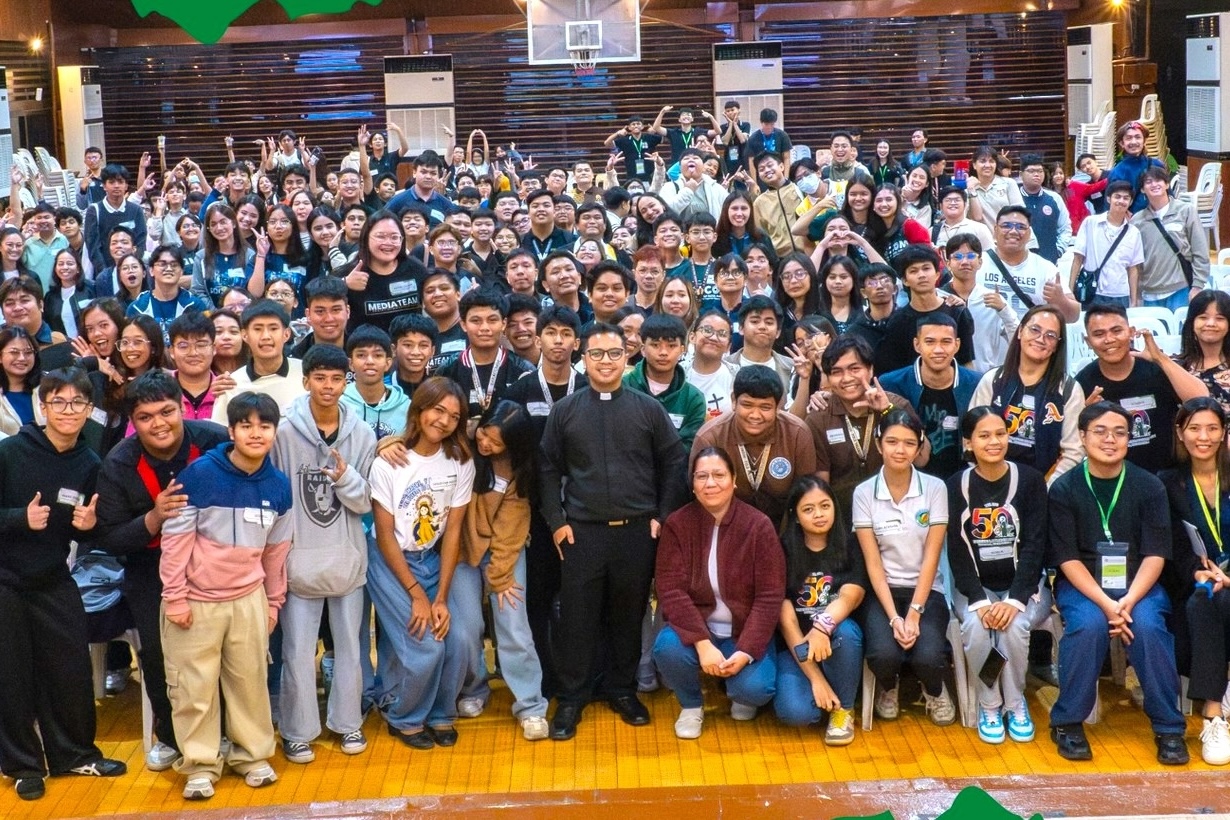
The Diocesan Commission on Social Communications supports the pastoral mission of the Bishop by helping the Diocese communicate, form, and evangelize through responsible and meaningful media ministry.
Organizational chart
Clergy and lay leaders serving the communications ministry of the Diocese of Malolos.
Chairman
Vice-Chairman
Diocesan Lay Coordinator and Executive Secretary
Assistant Secretary
Finance Officer
Public Relations Officer
Marketing Officer
Assistant Marketing Officer
Content Creation and Media Production Coordinator
Formation Program Development Coordinator
Events Management Coordinator
IT and Cybersecurity Coordinator
Website Coordinator
Across the Diocese
Local leaders who connect each vicariate to the diocesan communications ministry.
Malolos
Vicarial Chairman
Vicarial Lay Coordinator
Hagonoy
Vicarial Chairman
Vicarial Lay Coordinator
Plaridel
Vicarial Chairman
Vicarial Lay Coordinator
San Miguel
Vicarial Chairman
Vicarial Lay Coordinator
Baliwag
Vicarial Chairman
Vicarial Lay Coordinator
Bocaue
Vicarial Chairman
Vicarial Lay Coordinator
Sta. Maria
Vicarial Chairman
Vicarial Lay Coordinator
San Jose del Monte
Vicarial Chairman
Vicarial Lay Coordinator
Meycauayan
Vicarial Chairman
Vicarial Lay Coordinator
Valenzuela
Vicarial Chairman
Vicarial Lay Coordinator
Our story
“Communication is more than the expression of ideas and the indication of emotion. At its most profound level it is the giving of self in love.”
Communication is integral to the ministry of the Church. Even before technological advancements brought about mass media, the Church used every possible means to proclaim the Good News as mandated by the Lord (Mark 16:15). The Second Vatican Council (1962–1965) emphasized the significance of different forms of media in the ministry of the Church in the modern world. Its historic document Inter Mirifica paved the way for the creation of the Pontifical Council for Social Communications, now called the Dicastery for Communication (cf. Pope Francis, Prædicate Evangelium, 2022, art. 183–188). These structures carry out the communications ministry of the Church and provide a better understanding of social communication.
1962
In the Diocese of Malolos, the Office on Mass Media under the Diocesan Commission on Formation was established under the pastoral program WESTY (Worship, Education, Service, Temporal Goods, Youth). Rev. Fr. Efren Datu served as its first head.
1987
During the First Diocesan Synod of Malolos, the former office was made into a commission under Rev. Fr. Ricardo Mercado. The Commission on Mass Media was tasked to use radio, television, and print “to help the evangelization and to effectively disseminate Church information” (Diocese of Malolos, Acts and Decrees of the First Diocesan Synod of Malolos, 1987, decree no. 203).
2011–2013
As the need for media grew in the Diocese, the commission was formally named the Diocesan Commission on Social Communications during the tenure of Rev. Fr. Dario V. Cabral as Chairman. The official diocesan publication, Ang Sandigan, became a magazine, while Image and Likeness Publishing supported official diocesan publications. Radio programs included Ang Diyosesis on Radyo Veritas 846 and Biyaya at Pananampalataya on Radyo Bulacan 95.9. Linkages with Catholic, mainstream, and local secular media helped important diocesan events reach a wider audience.
On May 28, 2011, the commission held the First Diocesan Convention on Social Communications, addressing the state of media ministry in the Diocese in preparation for the Golden Jubilee. Other pre-jubilee initiatives included the first DCSC website and Facebook page. During the Golden Jubilee of 2012–2013, the commission actively documented jubilee events.
During the Second Diocesan Synod of Malolos in 2013, the Diocese affirmed its commitment “to venture into the new media and the new culture of communicating the Gospel of God’s love being its new pulpit” (Diocese of Malolos, Acts and Declarations of the Second Diocesan Synod of Malolos, 2013, PPI, pt. 2, 19). The section on faith formation through social communications proposed structures and programs for training, formation, and organizational efficiency from the diocesan to the parish level.
2015–2019
After the Golden Jubilee, Rev. Fr. Nicanor F. Lalog II was appointed DCSC Chairman. Fr. Lalog focused on the thrust “communication is spirituality,” which led to the Social Communications Formation Series in 2015. Held quarterly, the series addressed media spirituality, ethics in media, skills development, and relationships with media outlets.
In 2017, the diocesan bulletin Ang Sandigan became the Facebook page Ang Sandigan – Diocese of Malolos, offering greater accessibility than print. On February 23, 2019, the commission launched the diocesan website, www.malolosdiocese.ph, featuring the official history, directory, and resource pool for the Diocese’s media ministries.
2020–2022
While the COVID-19 pandemic almost paralyzed the world, the Church continued her ministry and turned to social media and the internet to reach the faithful and the wider public. In the Diocese of Malolos, parishes began livestreaming liturgical celebrations and devotions. More volunteers, especially young people, emerged to create content for parish pages. Parish Commissions on Social Communications multiplied and became more active in the ministry.
As pandemic restrictions eased, the DCSC resumed quarterly formation programs. On the LVI World Day of Social Communications during the Solemnity of the Ascension of the Lord on May 18, 2022, parish commissions in the Diocese held their first formal installation and renewal as Church ministers.
2022–Present
During the incumbency of Most Rev. Dennis C. Villarojo, Fifth Bishop of Malolos, new members of the Diocesan Curia were appointed and took their oath of office on July 25, 2022. Rev. Fr. Joseph Franz T. Dizon, who had been appointed earlier that year as DCSC Vice-Chairman, was tasked to serve as the new Chairman.
Recent developments include an organizational manual, the construction of a commission studio, an appreciation night for social communications volunteers, partnerships with media entities and sponsors, the change of the Diocese’s platform name to The Roman Catholic Diocese of Malolos – Ang Sandigan, and the diocesan website receiving the title of Best Diocesan Website at the 2022 Catholic Social Media Awards. These developments are fruits of God’s grace as the Commission continues its mission as an instrument of the New Evangelization.
Based on materials from the DCSC Progress Reports (2012, 2015, and 2017) and recent news.
By Kendrick Ivan B. Panganiban, S.Th.L.–M.A.